


Color Types:
The theory of seasonal color types was created by Swiss painter Johannes Itten. He was the first to pair color characteristics with people’s physical appearance. He developed four color types and named them after the seasons: Winter, Spring, Autumn, and Summer. The painter observed that his students used color palettes similar to their own physical appearance during class. Later, Carole Jackson shaped this theory into a more practical system and wrote the book Color Me Beautiful, in which she described the taxonomy of color analysis. These were the beginnings of the color consulting system and the development of color types. Seasonal color typing became popular worldwide during the 1980s and 1990s and remains influential today.
The basis of color type classification lies in our natural physical attributes: our skin tone, natural hair color, and eye color.
You’ve surely noticed that certain colors make you look fresh and radiant, while others make you appear pale, dull, or tired. Flattering colors always draw attention to the face and eyes—they enhance you. Unflattering colors pull attention away from the face. The reason for this is simple: when we wear shades that harmonize with our natural features, the overall effect becomes balanced and pleasing. But when we wear colors that oppose our natural palette, the result becomes disharmonious.
In my consultations, I use the 12-type color system. Every woman and man can be categorized into one of the 12 color types.
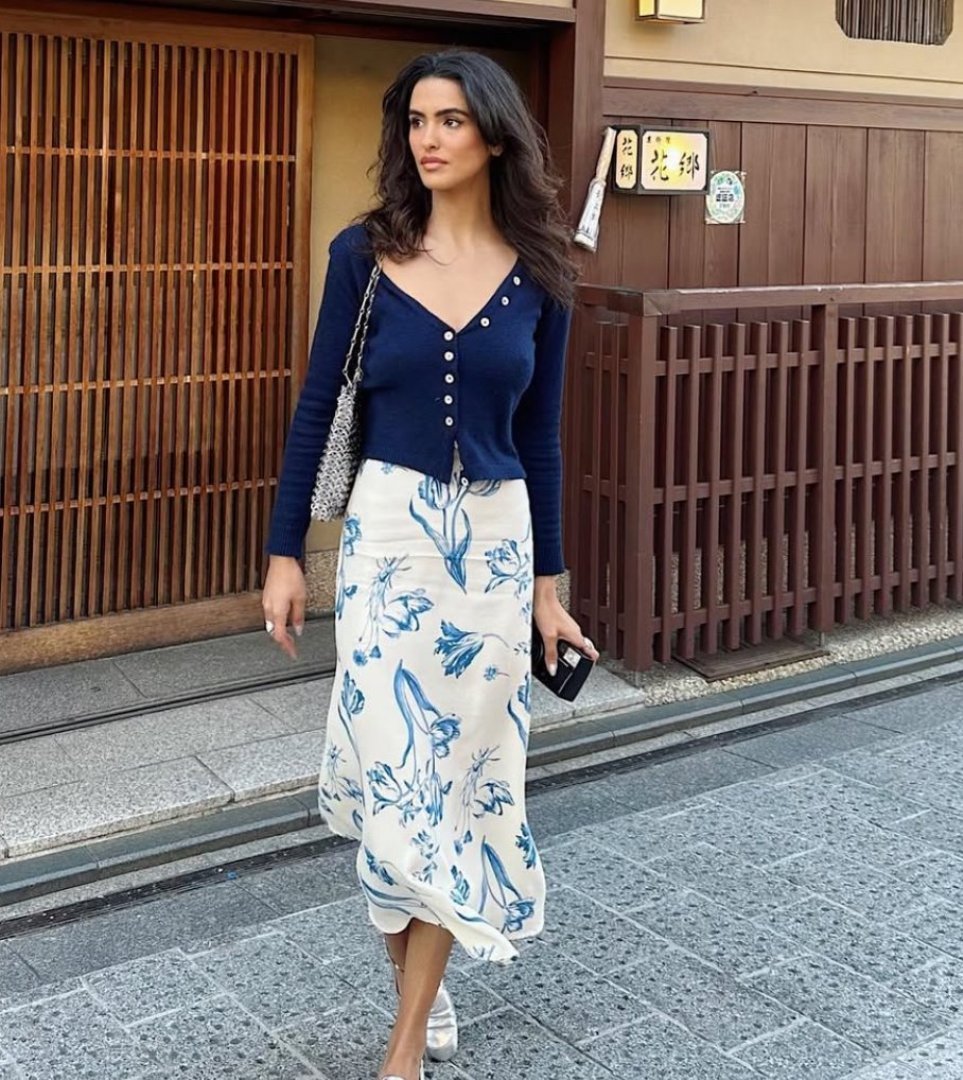

Skin tone
The shade of our skin is determined by the pigments produced by our pigment cells. From the perspective of color typing, skin tone is the most defining factor because our skin covers the largest visible surface of the body.
Based on color type classification, we distinguish between cool skin tones with rosy, bluish undertones, and warm skin tones with golden, peachy, or olive undertones.

Eye color
When determining a color type, eye color plays an important role.
We generally distinguish between strongly pigmented eye colors — such as bright blue, intense brown, or vivid green — and less pigmented, undefined eye colors, such as grey-blue, grey-green, or grey-brown.

Hair color
The color of our hair is determined by the pigments produced within the hair strands. Our hair color can be ashier, pearly, and cool-toned, or it can be warm, golden, or coppery in shade.
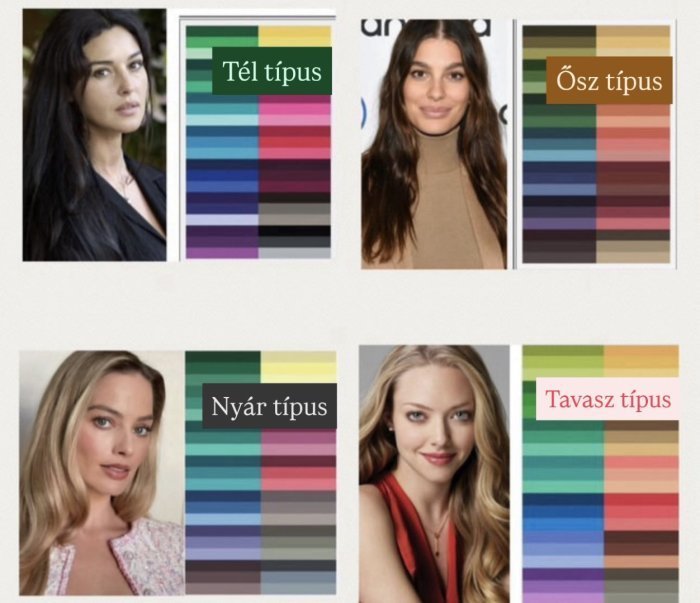
The properties of colors
Hue: The property of a color that allows us to identify it as yellow, blue, etc.
Saturation: Based on its saturation level, a color can be pure and vivid (saturated), or muted and softened (desaturated).
Lightness–darkness: A color can be light or dark depending on how much white or black is mixed into it.
Warm and cool colors: In color consulting, one of the most important aspects is whether a color gives a cooler or a warmer visual impression.
Every color has both warm and cool shades. For example, with the color red: the more blue we mix into red, the cooler it becomes — such as cherry red. And the more it shifts toward orange, the warmer it becomes — like poppy red or tomato red.
If someone naturally has cool coloring — for example rosy skin, ash brown hair, and cool-toned blue eyes — then cool colors will suit them best, because those are the ones that harmonize with their physical features.
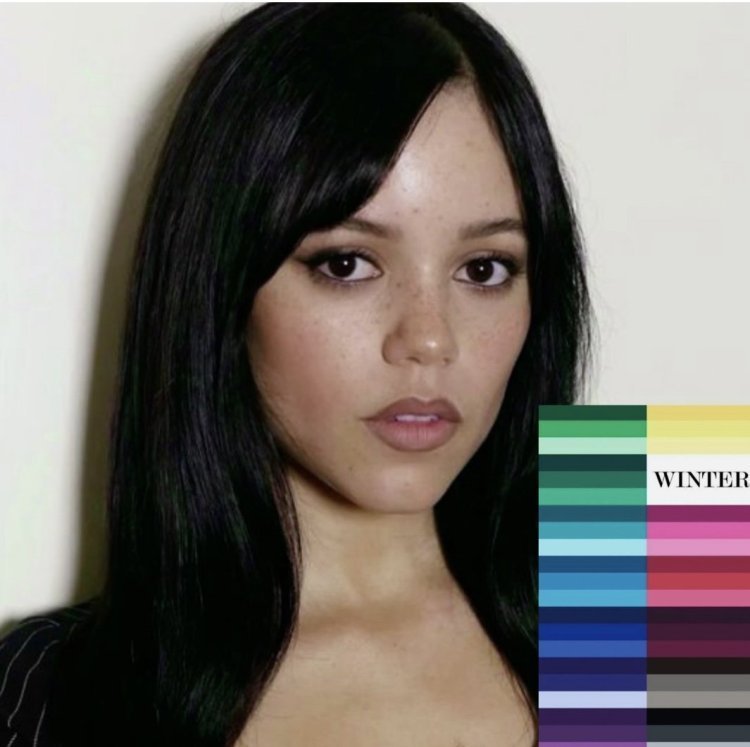
Winter type
Colors: Cool, bright, dark
Characteristics: Dramatic, high-contrast, defined
Skin tone: Rosy, cool olive, cool neutral, porcelain
Hair color: Ash brown, dark brown, black, blue-black
Eye color: Strongly pigmented, vivid eye colors — bright blue, green, or brown
Most flattering colors for the Winter type: Royal blue, pine green, blue-violet, magenta, fuchsia, pink, pure lemon yellow, ruby, black, violet blue, icy pink
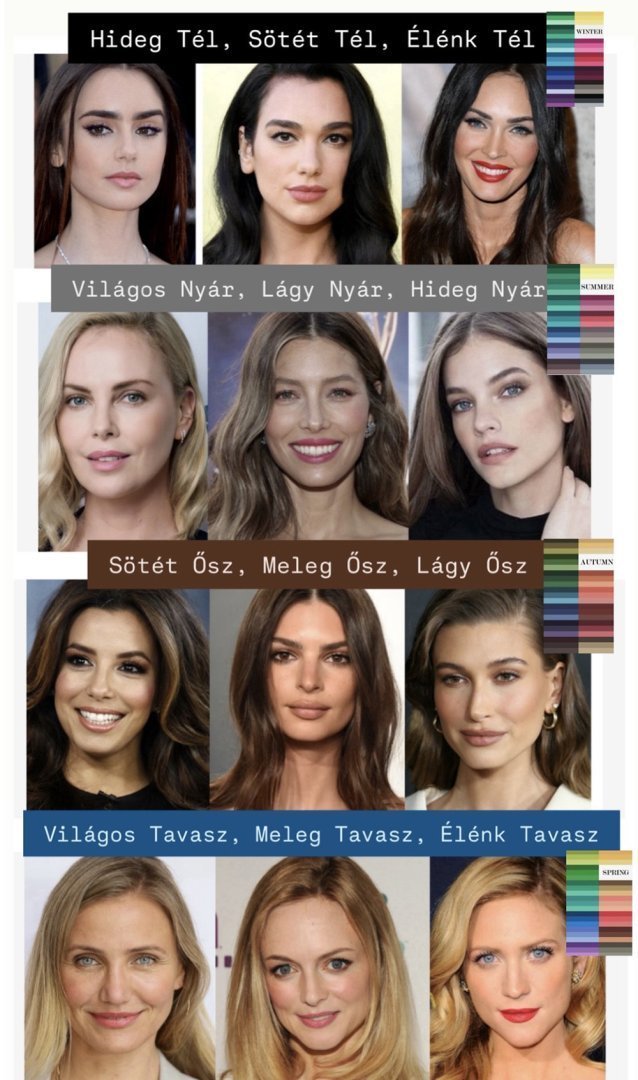
Winter subtypes: Cool Winter (Winter–Summer), Dark Winter (Winter–Autumn), Bright Winter (Winter–Spring)

Summer type
Colors: Cool, soft, light
Characteristics: Delicate, pastel, romantic
Skin tone: Cool beige, cool pink, neutral ivory, neutral beige
Hair color: Ash blonde, light cool blonde, greyish brown, ash brown
Eye color: Less strongly pigmented — grey-green, grey-blue, grey-brown
Most flattering colors for the Summer type: Baby blue, baby pink, grey, blue-grey, mint green, lavender, lilac, slate blue, off-white, raspberry red
Summer subtypes: Cool Summer (Summer–Winter), Light Summer (Summer–Spring), Soft Summer (Summer–Autumn)
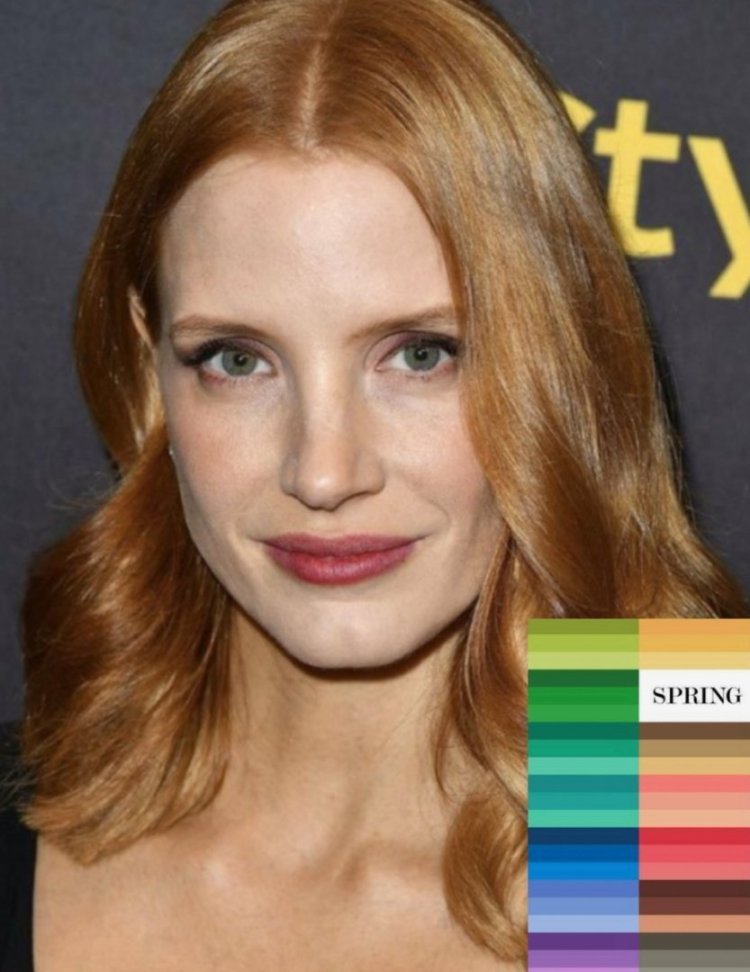
Spring type
Colors: Warm, bright, light
Characteristics: Cheerful, vibrant, fresh
Skin tone: Warm peach, warm beige, neutral beige
Hair color: Warm blonde, golden blonde, honey blonde, copper red
Eye color: Blue-green, mint green, warm brown, golden brown
Most flattering colors for the Spring type: Willow green, sky blue, lime green, buttercream, salmon, coral red, peach pink, turquoise green
Spring subtypes: Bright Spring (Spring–Winter), Warm Spring (Spring–Autumn), Light Spring (Spring–Summer)
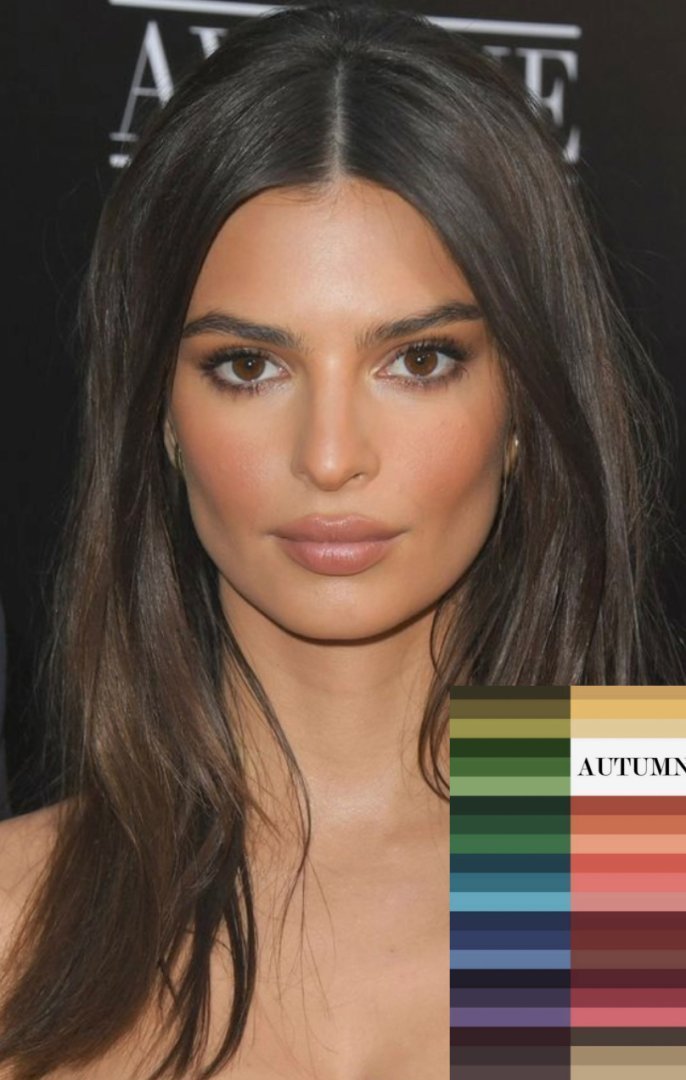
Autumn type
Colors: Warm, soft, dark
Characteristics: Golden, sun-kissed, enchanting
Skin tone: Warm beige, olive, warm peach, warm olive
Hair color: Honey brown, chestnut brown, copper red, mahogany
Eye color: Olive, hazel, golden brown, dark brown, black, peacock blue
Most flattering colors for the Autumn type: Cinnamon, golden brown, olive green, tomato red, camel, orange, ochre, red-orange, oil blue
Autumn subtypes: Warm Autumn (Autumn–Spring), Dark Autumn (Autumn–Winter), Soft Autumn (Autumn–Summer)
The 12 Subtypes
Makeup colors
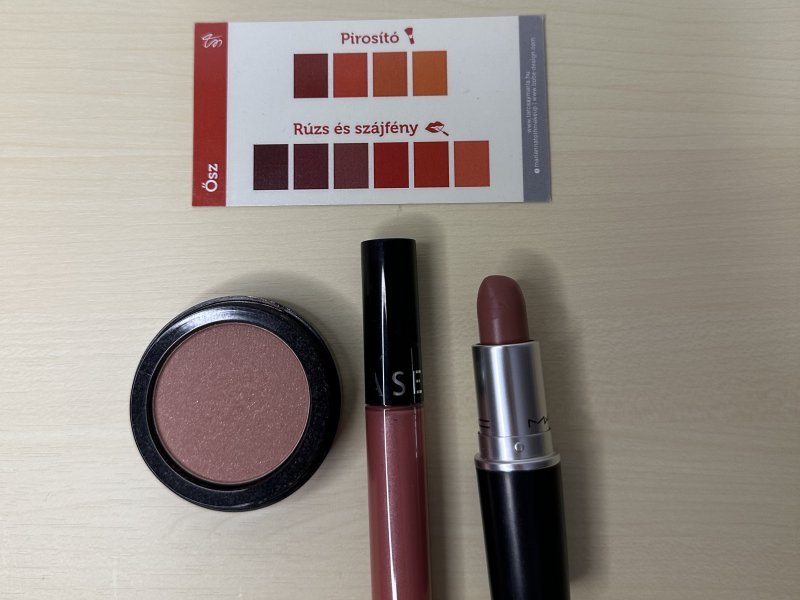
Autumn type
Lipstick: soft brown, reddish brown, rusty brown
Blush: bronzer, terracotta, soft brown
Eyeliner: dark brown, medium brown, dark green
Eyeshadow: warm tones
Highlighter: warm golden shades
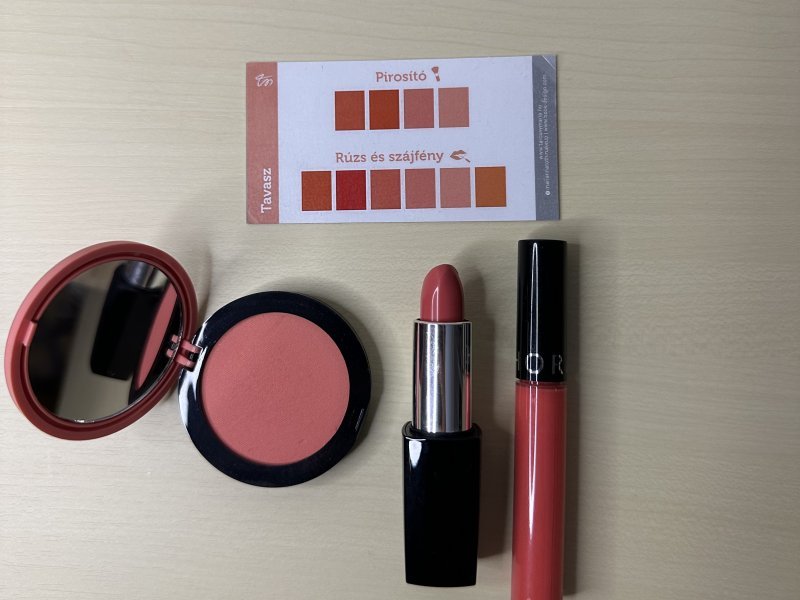
Spring type
Lipstick: peach pink, salmon, coral red
Blush: peach pink, salmon, rose red
Eyeliner: dark brown, brown, black-brown
Eyeshadow: warm tones
Highlighter: warm golden shades
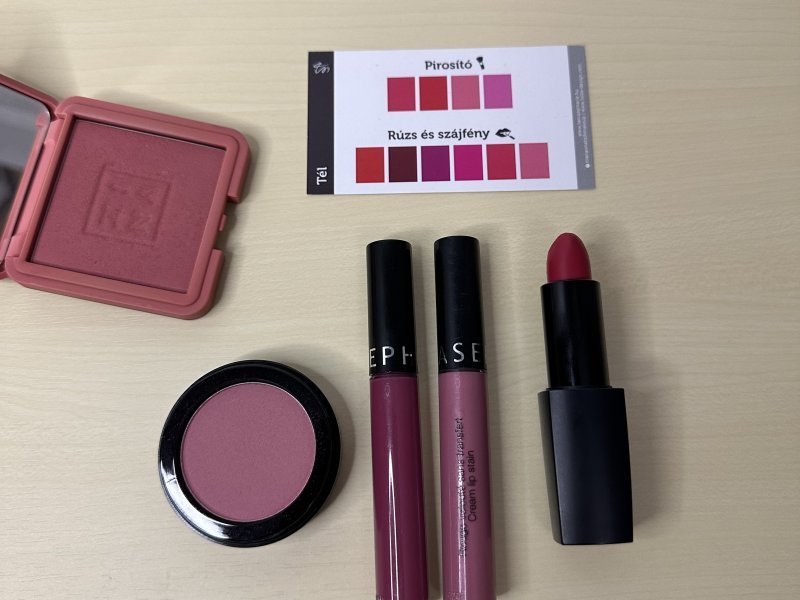
Winter type
Lipstick: mauve pink, pink, fuchsia, blue-red
Blush: pink, mauve pink, lavender-rose shades
Eyeliner: black, dark brown
Eyeshadow: cool tones
Highlighter: cool, silvery shades
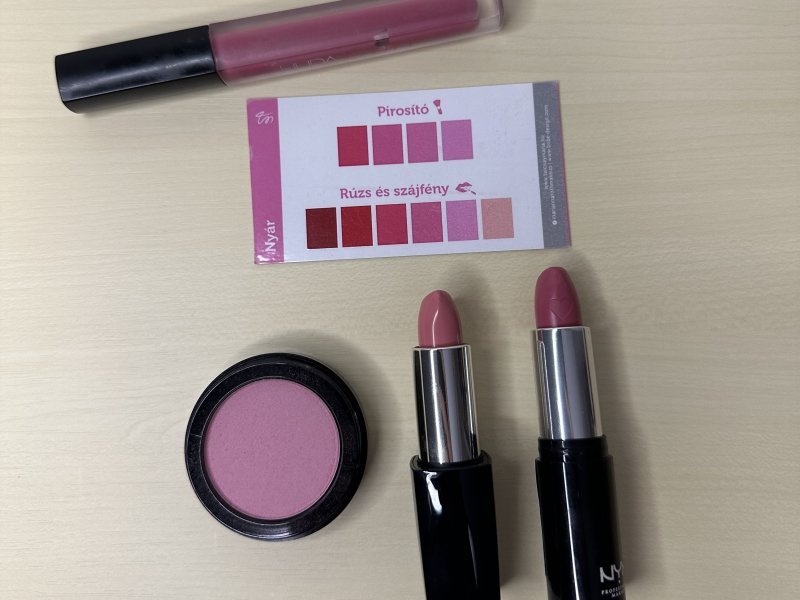
Summer type
Lipstick: lavender-pink, baby pink, raspberry red
Blush: lavender pink, baby pink
Eyeliner: dark grey, grey, black-brown
Eyeshadow: cool tones
Highlighter: cool silvery shades